Often low and sprawling, Atriplex semibaccata, commonly known as Berry Saltbush, is a hardy Australian native groundcover celebrated for its silvery grey-green foliage and quiet resilience. Small diamond-shaped fruits ripen to a soft red through the warmer months, scattered like beads across its trailing branches. Native to every Australian state bar the Northern Territory, it has long grown at home in coastal dunes, salt flats and inland plains, and asks for little in return for the ground it covers. It performs exceptionally well in Australian conditions, particularly across Victoria’s coastal and drier inland regions.
What Conditions Does Saltbush Need?
Berry Saltbush is highly drought tolerant, thriving in full sun to part shade where its foliage holds its silvery tone. It tolerates a wide range of soils, including poor, saline and clay-heavy ground, provided drainage is adequate. Spreading 1-3 metres wide but rarely rising above half a metre, it hugs the ground rather than competing for space above it. When planting, allow room for its lateral spread and avoid overly rich or waterlogged beds.
How Much Care Does Saltbush Need?
Once established, Berry Saltbush is remarkably low maintenance. Little to no fertiliser is needed, as it’s adapted to lean, saline soils and rarely requires feeding. Occasional light trimming keeps growth dense and tidy, particularly useful where it’s used as an erosion-control groundcover. Its high leaf-salt content also makes it naturally fire-retardant, a quiet asset in fire-prone gardens.
A Plant That Is Edible and Safe for Pets
Both the leaves and berries of Berry Saltbush are edible, with a naturally salty flavour that makes them a favourite among cooks using native ingredients. The leaves work particularly well as a seasoning when roasting meats, imparting a subtle saltiness without needing additional salt. The berries can be eaten fresh or cooked into jams. Reassuringly for households with pets, Berry Saltbush is non-toxic to cats and dogs, making it a safe choice for gardens where four-legged family members roam.
Where Does Saltbush Belong in a Garden?
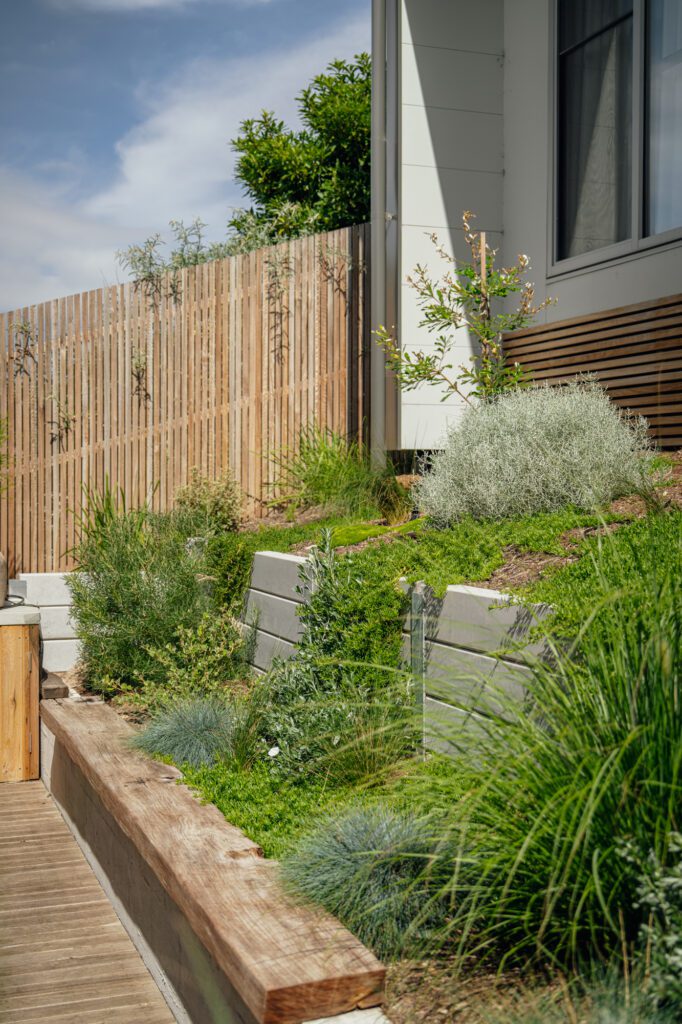
Berry Saltbush makes a soft, textural statement in coastal and native-inspired gardens. Its muted, silvery foliage provides excellent contrast against deeper greens and structural plantings, while its low, spreading form works beautifully as underplanting or edging.
Plants That Pair Well With Saltbush
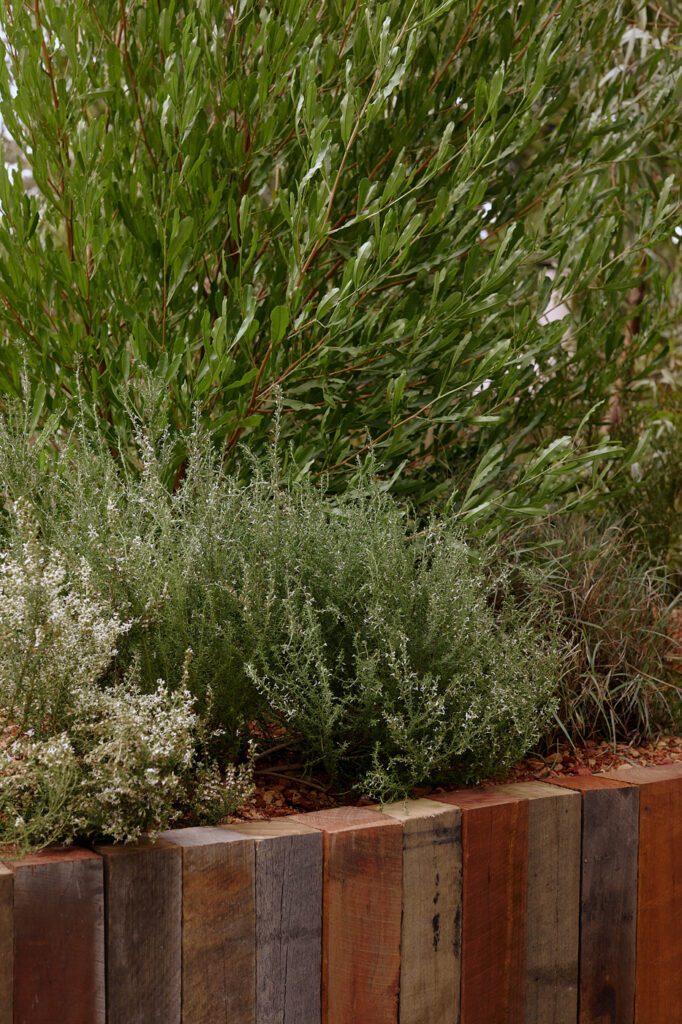
At Longview Landscapes, we typically position Berry Saltbush beneath larger shrubs or trees, or trailing over retaining walls and rockeries where its form can soften hard lines. Its muted grey-green foliage pairs beautifully with drought-tolerant natives such as Westringia and Correa, while Lomandra and ornamental grasses introduce contrasting texture and movement. Together, these combinations create layered, cohesive planting schemes that feel grounded in the surrounding landscape.