

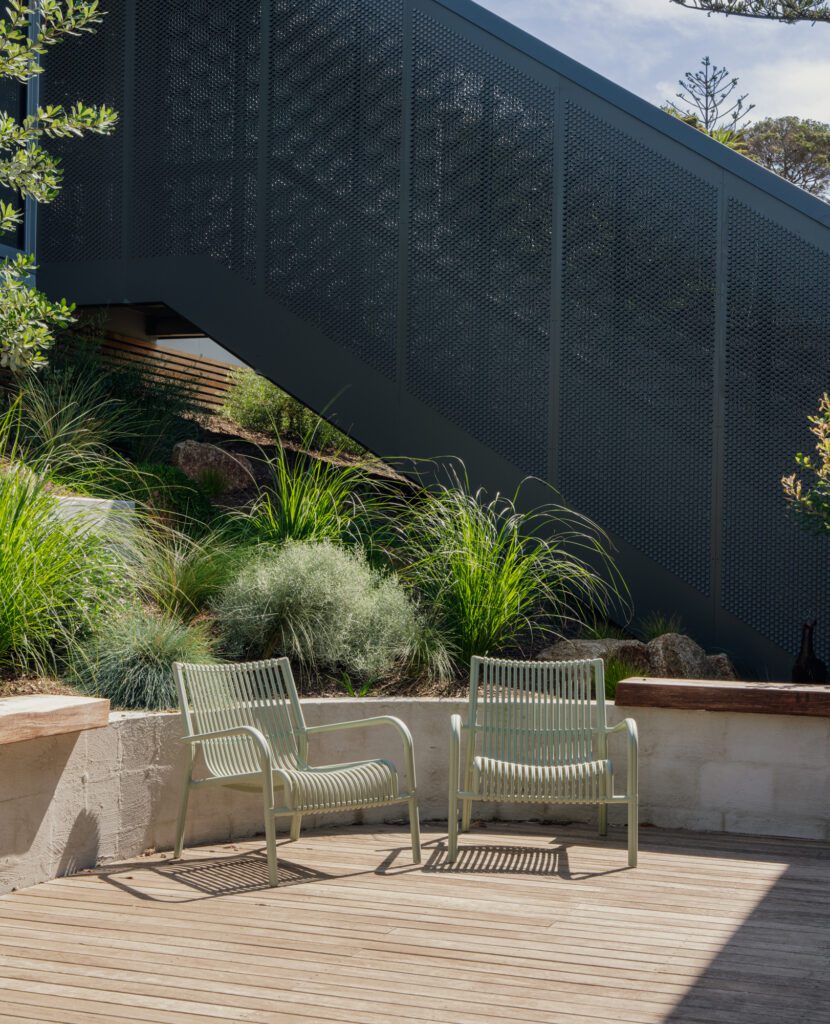
Note: This is targeted for further south of the Peninsula. Conditions vary and this is more for Rosebud through to Portsea.
Coastal Gardens on the Peninsula are a special thing when they come together, and they have a unique structure and set of requirements. If you planted something that looked perfect at the nursery, and a few weeks of salt wind later the leaves are burnt brown on one side and dropping, don’t worry, you’re not alone. The further down the Peninsula you go — Blairgowrie, Sorrento, the back beaches — the harder the site works against you.
Coastal gardens here face three forces at once: salt-laden wind, sandy soil that drains almost too well, and long dry summers. Fighting them is a losing game. The gardens that thrive are the ones built to work with the conditions rather than against them — and that starts with choosing plants that belong here.
Salt does the damage here. When it lands on foliage it draws moisture out the same way it does in us, scorching leaves and forcing premature drop. In the soil it’s worse, making it harder for roots to take up water at all. On an exposed block the wind carries that salt well inland, so it isn’t only the plants with a bay view that cop it.
The sandy soils common across the Peninsula add a second problem. They drain fast and hold little — low in nutrients, quick to dry out. That’s not a flaw to be corrected so much as a condition to plant for. The species that evolved on this coastline expect exactly these soils.
The practical upshot: design and plant choice is the single biggest factor in whether a coastal garden looks after itself or becomes a constant battle.
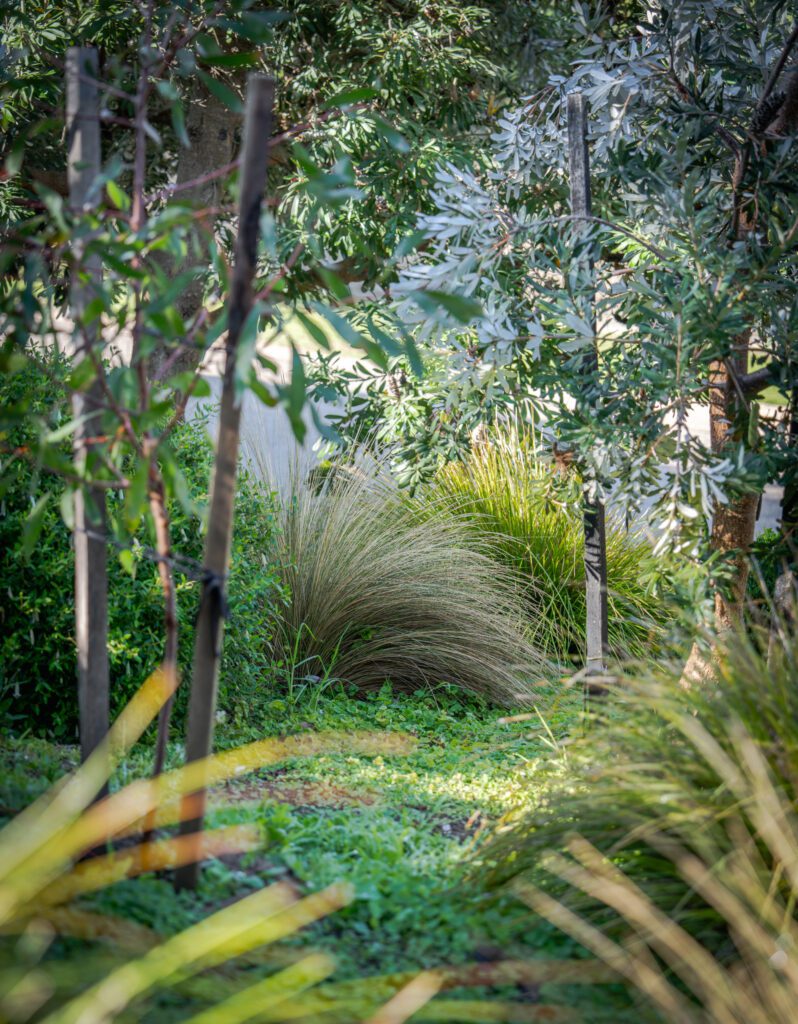
The most resilient coastal gardens borrow their structure from the way coastal vegetation grows naturally. The toughest, salt-hardiest plants sit on the exposed front line and take the brunt of the wind, sheltering softer species behind them. A fence, wall or the house itself does the same job — the leeward side of any structure becomes a calmer microclimate where you can get away with less hardy planting.
Get the structure right and you can have far more variety than an exposed site would otherwise allow.
These are species that genuinely handle Peninsula coastal conditions — most of them indigenous to this stretch of coast, which is why they cope.
Get the structure right and you can have far more variety than an exposed site would otherwise allow.
If you want a softer, Mediterranean feel rather than a strictly native one, lavender, rosemary and olives all sit happily alongside these — they want the same free-draining soil and dry summers.
Get the structure right and you can have far more variety than an exposed site would otherwise allow.
Even the toughest coastal plant needs help in its first season. A few things make the difference between survival and a slow decline:
Work composted organic matter through sandy soil before planting. It won’t change the character of the soil, but it lifts its ability to hold moisture while young roots find their feet. Mulch heavily — a thick organic layer keeps the soil cooler, slows evaporation and breaks down to feed the soil over time. And water consistently through establishment, even with species you’ll later never need to water. Drip irrigation does this best, delivering water to the roots without waste.
One more thing worth knowing: mature plants shrug off salt far better than young ones. Give new plantings whatever shelter you can while they settle, and they’ll repay it.
Blairgowrie is about as honest a test of all this as the Peninsula offers — a back-beach block, sandy through and through, with the Moonah woodland character that defines this part of the coast. On a recent project there, the approach was exactly the one above – letting the existing Moonahs set the tone, build the planting in layers so the hardiest species took the wind, and lean on an indigenous palette — Westringia, Poa, Karkalla that would look after itself once established. It’s been eight months since planting and they’re now flourishing, with happy homeowners and a site that ties in perfectly with the architecture — it couldn’t be better matched.
The point isn’t that coastal gardens have to be sparse or scrubby. Worked with properly, the same conditions that kill the wrong plants produce a garden with real character — green and silver tones, movement, and the kind of texture you only get from plants that belong where they’re standing.
A coastal garden on the Peninsula isn’t built to look finished on day one. It’s built to settle in — to get tougher and better as it matures into its site. Choose plants that belong here, give them a fair start, and the wind and salt stop being the enemy.
If you’re working out what suits your block, that’s a conversation we’re always happy to have.
12/33 Milgate Drive, Mornington 3931
+61 430 795 456
info@longviewlandscapes.com.au