

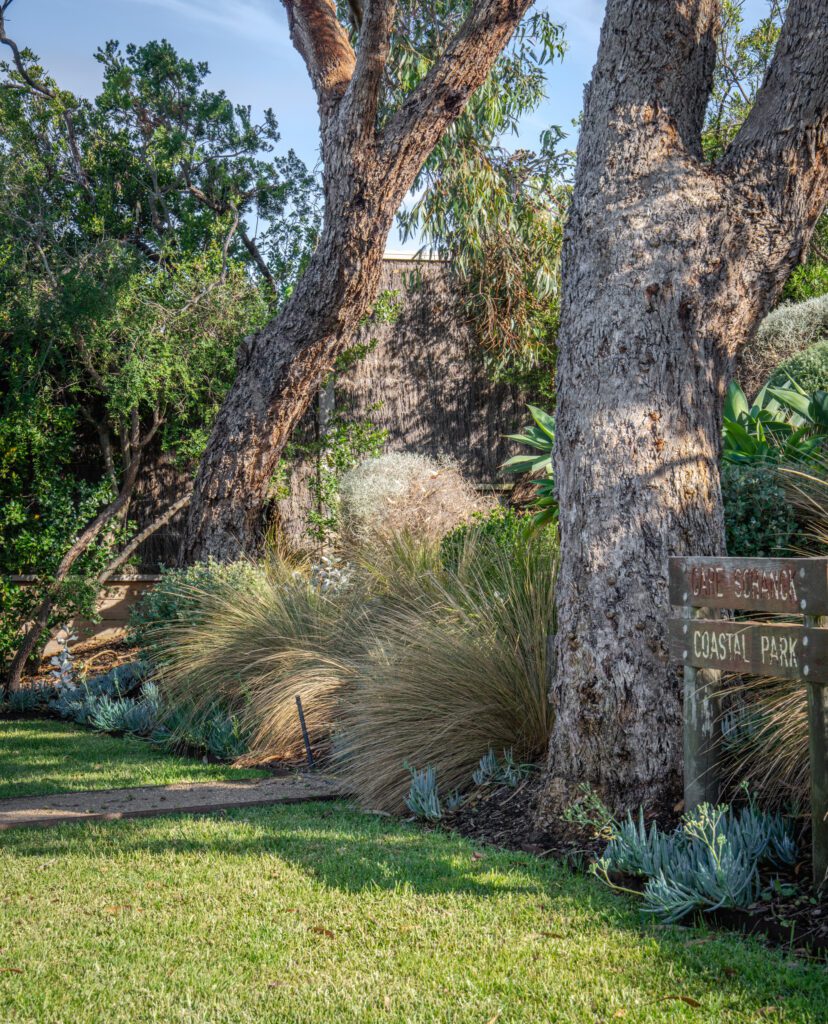
A note: this article is aimed at Mornington and the northern Peninsula — Mount Eliza, Mount Martha, Mornington itself. The bay side is a gentler proposition than the ocean back beaches further south. If your block is down past Rye toward Portsea, our coastal gardens guide is the one you want.
If you’ve ever brought something home from the nursery, planted it out, and watched it sulk through its first summer, you’re in good company. Gardens on the Peninsula have their own rules, and the plants that ignore them tend not to last. The good news for Mornington is that the bay side plays fairer than the back beaches — which means a garden here can carry more variety than most people expect, if it’s built around the right plants from the start.
That’s the part worth getting right before anyone picks up a shovel. Most people looking for landscapers in Mornington are really after a garden that looks after itself — one that settles in and gets better rather than becoming a standing repair job. It nearly always comes down to plant choice.
The northern Peninsula sits on the calmer, bay-facing side of the land. It still gets salt on the breeze and the same long, dry summers as everywhere down here, but it’s spared the constant ocean wind that shears back planting on the southern beaches. That shelter is the opening — it lets a Mornington garden hold softer, more ornamental species that wouldn’t survive an exposed back-beach block.
Soil is the other half of the story, and here it’s less predictable than further south. Near the foreshore you’ll find the familiar free-draining sand — quick to dry, low in feed. But climb the ridges around Mount Martha and Mount Eliza and it turns to heavier loam and clay that holds water and needs opening up. The first job on any Mornington site is knowing which one you’ve got, because the two want opposite things.
Get the read on soil and aspect right and good design does the rest. It’s the single biggest factor in whether a garden thrives or fights you.
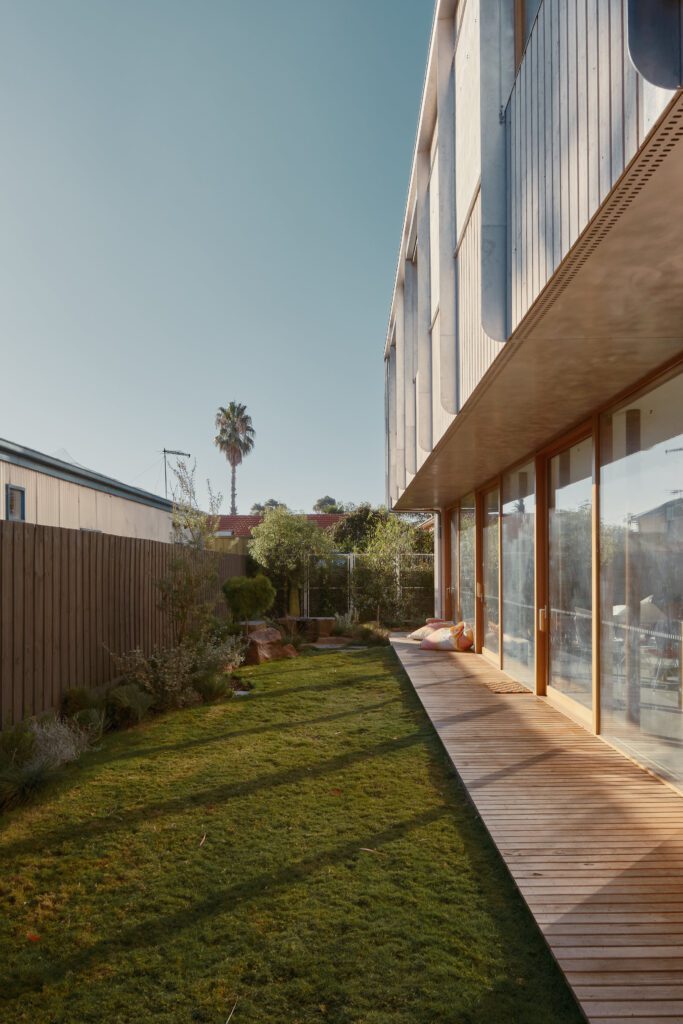
The toughest coastal gardens borrow their structure from the way the coast plants itself. The hardiest, most salt-tolerant species go on the exposed edge and take the wind; softer planting shelters behind them. A fence, a wall or the house itself does the same work — the leeward side of anything becomes a calmer pocket where you can get away with more.
On the more sheltered blocks around Mornington, that principle buys you real range. Anchor the exposed edges with the bulletproof stuff, and the protected beds open up to colour, texture and softness the back beaches simply can’t hold. Landscapers Mornington Peninsula wide will always understand the delicacy of these finer details.
Landscapers Mornington will build for northern-Peninsula conditions. Most are indigenous to this coast, which is exactly why they cope — but the sheltered sites here also make room for a few things the exposed south would burn off.
Because Mornington’s sheltered ridge gardens sit on the same free-draining soil and dry summers, the classic Mediterranean plants belong here too. Olive (Olea europaea), rosemary, lavender and silver germander (Teucrium fruticans) all handle the heat and salt, and germander in particular clips into a tidy low hedge. Used alongside the natives, they give a garden a warmth that reads well against Peninsula architecture.
Even the toughest of these needs a hand in its first season. A few things make the difference between a plant that settles and one that slowly gives up.
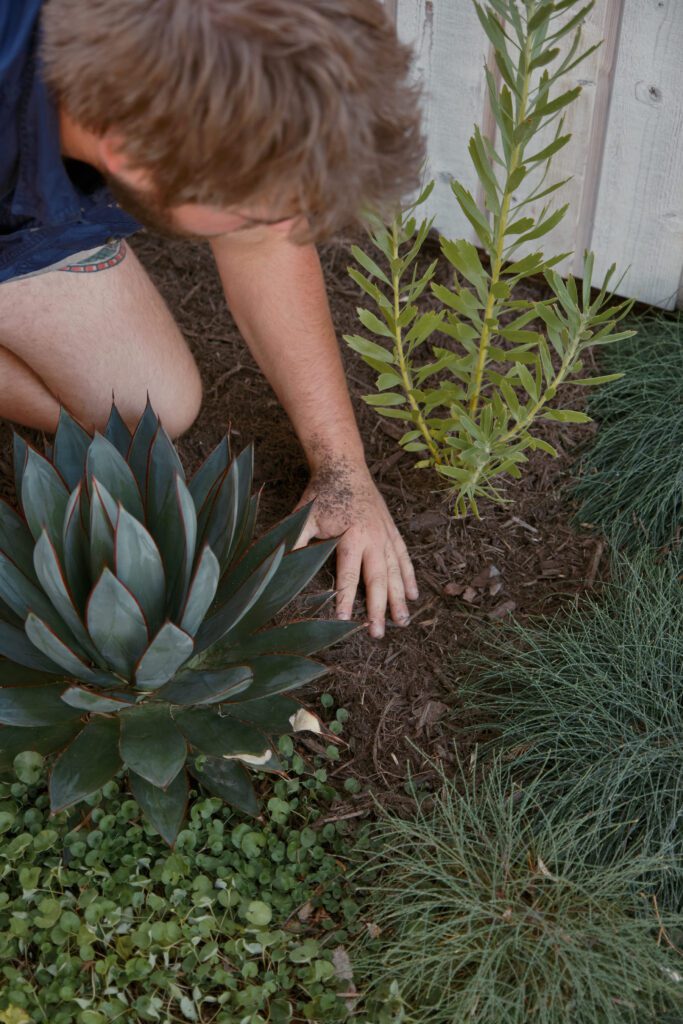
On sandy soil, work composted organic matter through before planting — it won’t change the soil’s character, but it lifts its ability to hold moisture while young roots find their feet. On the heavier ridge soils, the job is the opposite: open the ground up so it drains and roots don’t sit wet. Either way, mulch heavily to keep the soil cool and slow evaporation, and water consistently through establishment, even for species you’ll later never need to touch. Drip irrigation does this best.
One last thing worth knowing: mature plants shrug off salt far better than young ones. Give new planting whatever shelter you can while it settles, and it pays you back.
Our most recent Mount Martha garden put the whole approach to work. It took a fair bit of work to get there, and the finished design is organised into distinct sections — a run of connected garden areas rather than one open sweep, each with its own character and planting. Bark mulch was laid heavily throughout, doing exactly the job described above: holding moisture through summer, keeping roots cool, and tying the sections together underfoot. A teepee feature gives the garden its focal point — the kind of structural moment that anchors a layout and gives the eye somewhere to rest.
The point isn’t that a coastal garden has to be sparse. Worked properly, the same conditions that kill the wrong plants produce a garden with real character — green and silver tones, movement, and the texture you only get from plants standing where they belong.
12/33 Milgate Drive, Mornington 3931
+61 430 795 456
info@longviewlandscapes.com.au